History – Real And Imagined – Of The Berlin Mill
Viable silver ore in the region was first discovered in 1863. By 1864, the Ione/Union mining district was booming. The town of Ione was formed and was the county seat for a short while. Several mills were built in the area to process the ore but legal issues plagued the operations. The 20-stamp Knickerbocker Mill was built a few miles south of Ione and operated from1866 to 1875. The first shipment from the mill – 166 pounds of bullion extracted from $60/ton ore (about 3oz/ton) – was shipped to Austin in 1866; Austin being the rail head at the time. In spite of this start, the mill started having operational problems and went idle in late 1867. The mill was repaired but faced competition in 1869 when a mill was built in nearby Grantsville.

The Knickerbocker Mill was revived in 1887 to process ore from the Berlin Mine. In 1897, the mill ceased operation and the equipment moved to the new Berlin Mill.

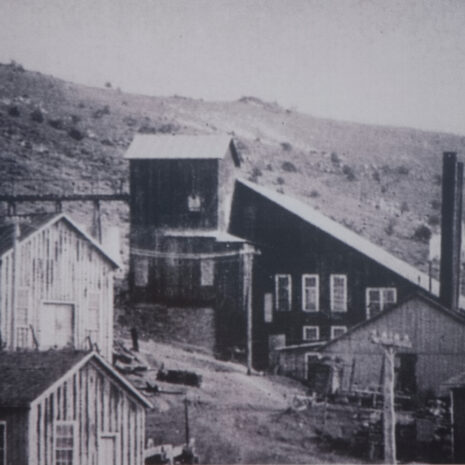
Corporate interests in the form of the Nevada Company began to purchase the mines in the area and built the town of Berlin to service the new 30-stamp Berlin Mill. The town peaked in the early 1900s but a banking crisis in 1907 began the town’s decline. By 1911, the thrill was gone as were most of the population and businesses.

Berlin was a company town. Saloons and other such businesses were not permitted in town but existed at the official town limits. At its peak, the town had a population of 250-300 people including a doctor, nurse, forest ranger, and prostitute. Aside from the mill and associated structures, the town held an assay office, union hall, post office, and stage station.
The town remained the property of the Nevada Company and was generally closed off to the public with a security guard to protect the company assets. The site was acquired by the state of Nevada in 1970 and the town and mill are now part of the Berlin–Ichthyosaur State Park.


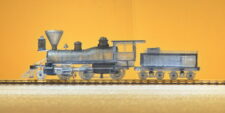
The region was never served by a railroad; processed ore was transported by wagon to Austin where the narrow gauge Nevada Central Railroad (1880-1938) ran north to Battle Mountain to a connection with the standard gauge Southern Pacific Railroad (formerly the Central Pacific; the western half of the original Transcontinental Railroad)
Modern State Highway 306 roughly follows the Nevada Central route between Austin and Battle Mountain. None of the stations shown on the map exist today.


The mines played out and so did traffic as roads were built for trucks. Rails were pulled up and there are only a few remnants indicating a railroad ever ran through here.
History Imagined
This is model railroading – a place where imagination and what-if resides.
By 1885, the Nevada Central extended south to the Ione/Union Mining Districts through Smith Creek and Ione valleys.
Nevada State Highway 722 southwest out of Austin to the Peterson Station site (where 722/2 turns due west) is built on the old RR route; from there the rails ran south past Ione to Berlin. The old roadbed is now an unimproved road/trail.

The Berlin Mill would then would have transport processed ore along the extended Nevada Central Railroad up to Battle Mountain and (likely) to the smelters outside Salt Lake City.
Traffic was brisk but as the mines played out so did traffic. A 30-year run but the rails were pulled up by WWI.

