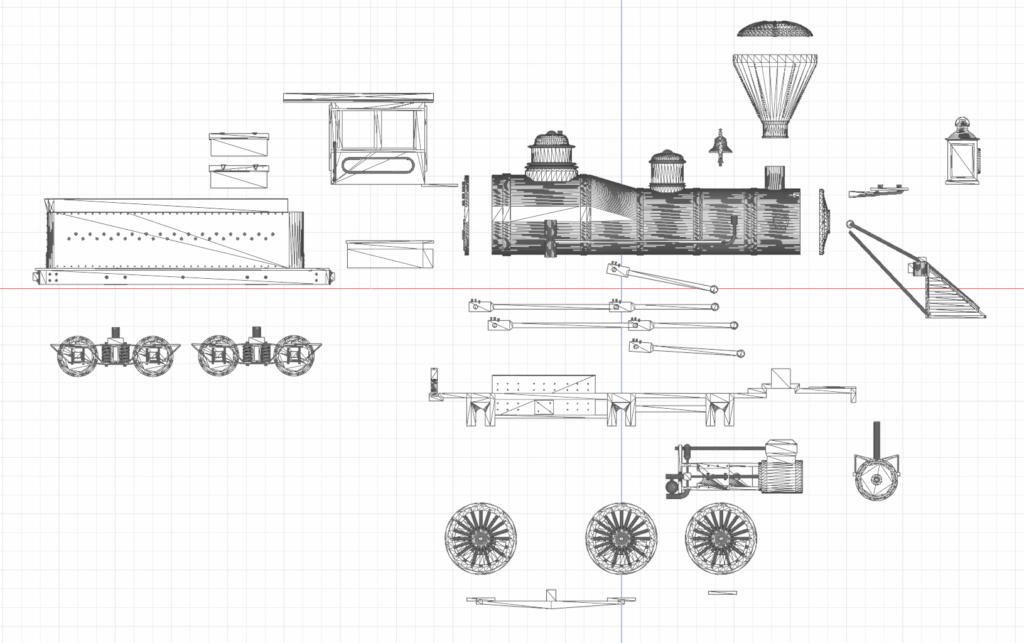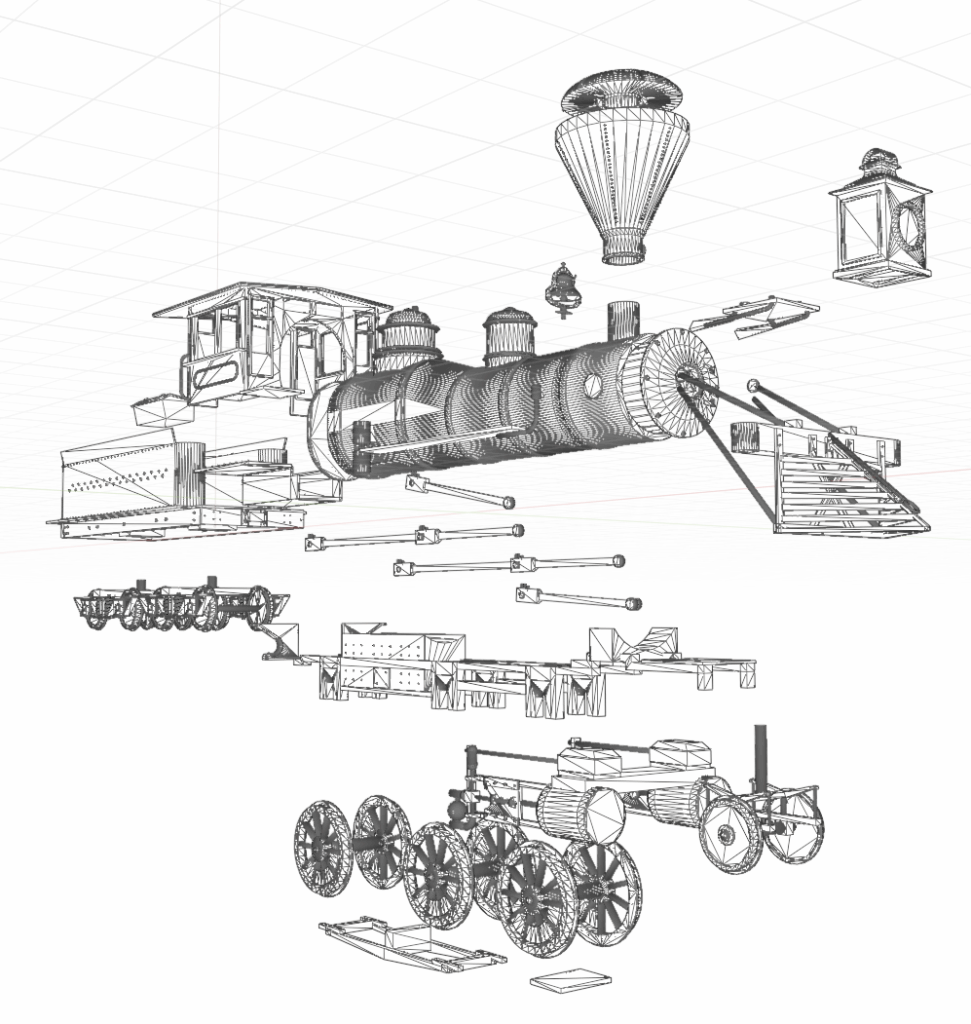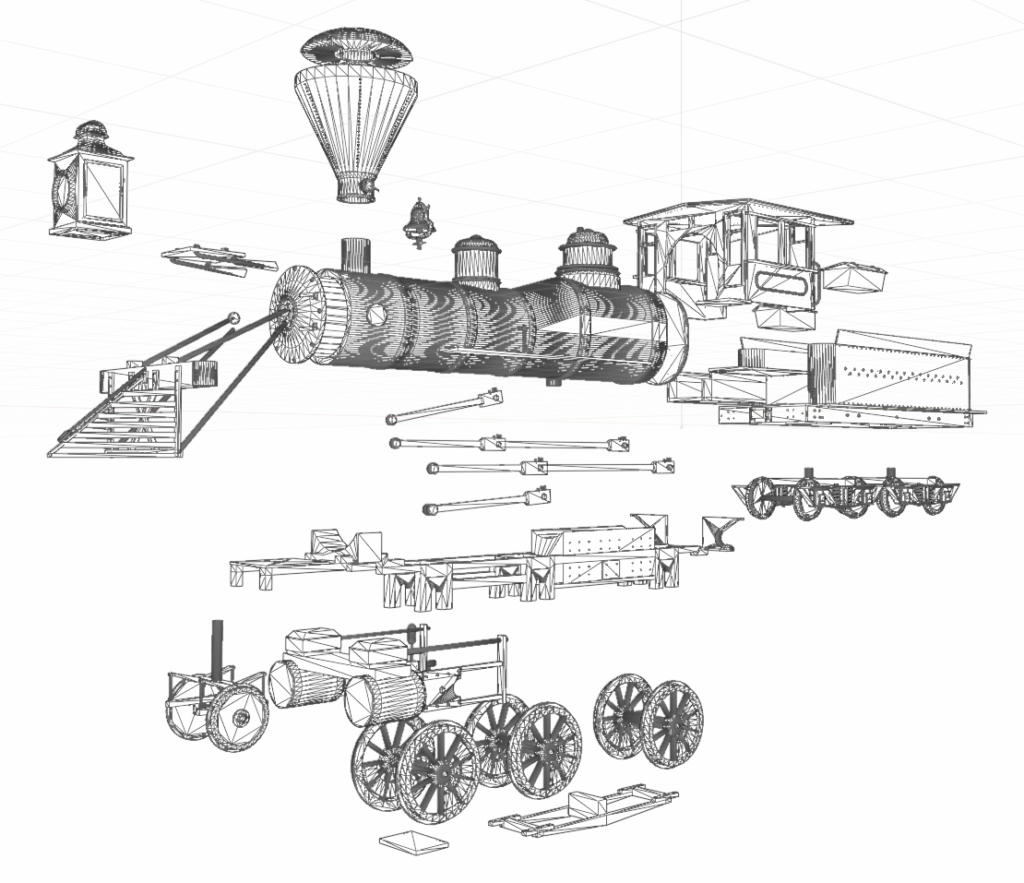
I found myself using live engines for static displays. Engines aren’t cheap … but I wanted something – many somethings – to sit around a roundhouse scene or something for a static diorama; the engine doesn’t need to run, it doesn’t need sound, lights, DCC, or any of the bells and whistles desired for a running engine. It doesn’t even need to be worthy of “rivet-counting”.
I need background engines, not suitable for close-up viewing … who’s going to count rivets on that engine sitting inside the roundhouse?
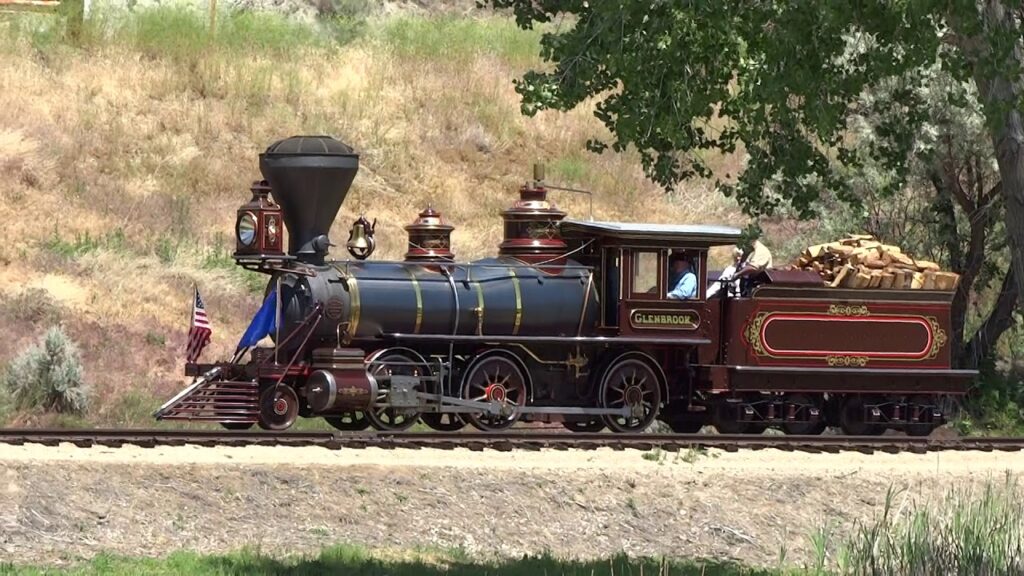
One of the first “real” 1870s engines I ever saw was the Glenbrook when it was stuffed and mounted like a Thanksgiving turkey, sitting out in the open alongside the old Carson City mint in Nevada.
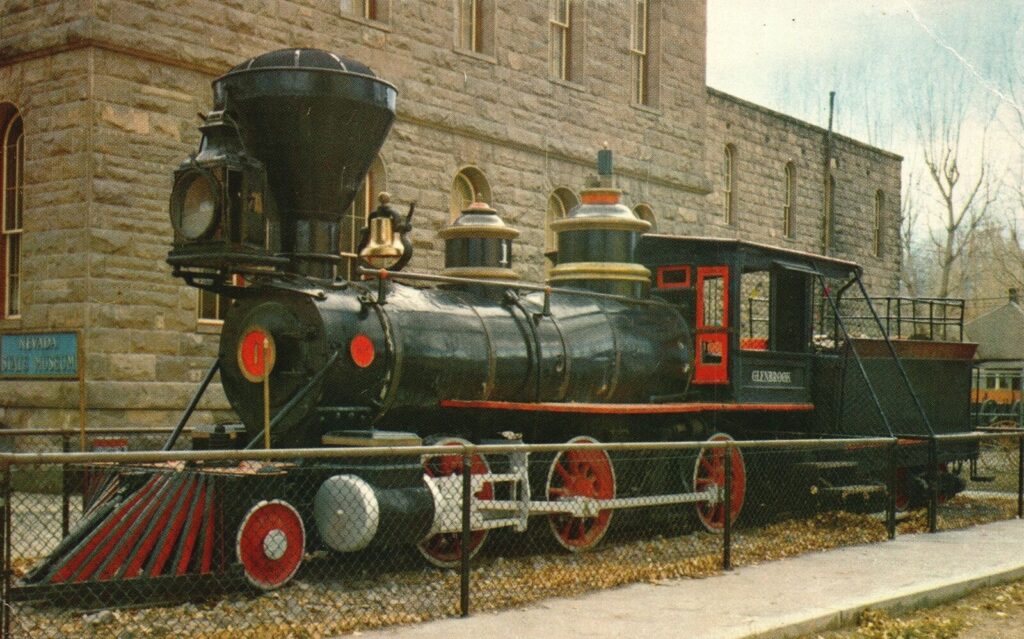
I think those old 1870s engines are among the most beautiful machines ever built. Since I loosely model the 1880-1910 era, this was one of first engines I wanted to model.
Queen of 1870s railroad technology, the Glenbrook was built for service on a lumber company along the Nevada side of Lake Tahoe. After several changes of ownership, the final owners donated the engine to the Nevada State Museum where it has now been restored to operating condition.
Pulling out the old CAD software and making some hopefully intelligent guess as to dimensions, plans for 3D-printing of a representative locomotive came to pass.
The pre-production result:
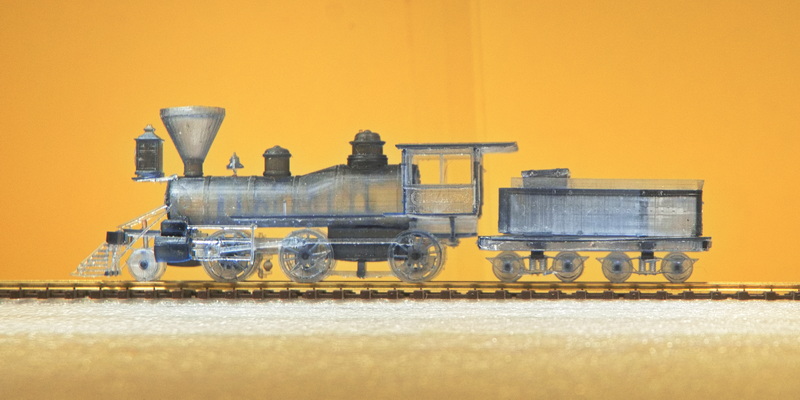
This model is entirely 3D printed. A semi-transparent resin (“smoky black”) is used – colored resins could affect the final paint job. The cured resin is workable; it may be sanded and drilled. It is relatively immune to normal handling although fine pieces may prove fragile. Typical plastic glues are not appropriate; super-glues, epoxies, or Gorilla Glue will work well. A primer coat should be used on this material.
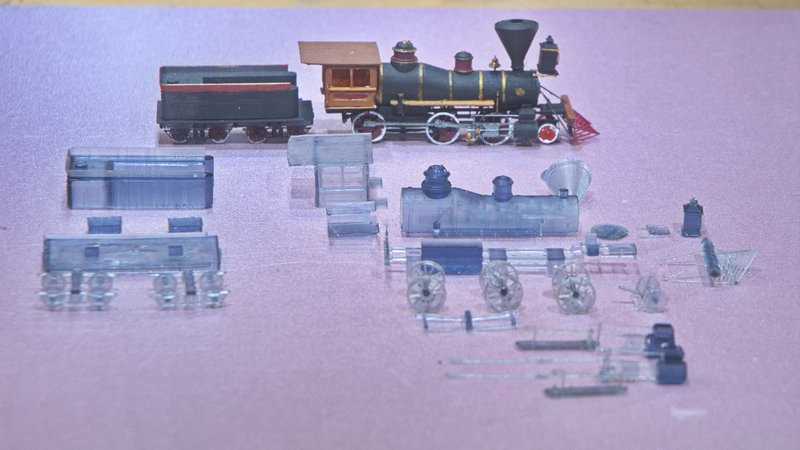
The kit is simple enough … here are the parts, put them together.
Well, perhaps a bit more involved than that.